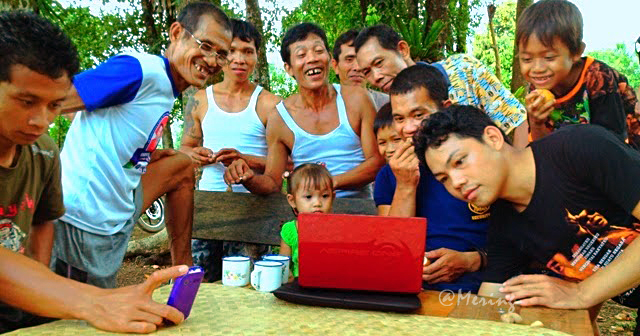
According to Yohanes Aboy, a community leader and Loncek’s Catholic head, the isolation of the village was only opened to outsiders in 2010, when a palm oil plantation owned by PT. Palmdale Agro Asia Lestari opened up a company and built a road to the area. The only route to the village at the time was using the river. If the river subsided,it would take up to three days and two nights using a motorboat to reach Loncek village from Pontianak city, the capital city of West Kalimantan.
Administratively, Loncek is located at the end of Ambawang River district, Kubu Raya regency, West Kalimantan province and is also a part of Teluk Bakung village. It shares borders with Tayan Hilir district, Sanggau Regency.
According to Gaeb, the settlement of the Salako community in Loncek existed since 1910, ‘opened by two people named Nek Motek and Timanggong’, long before the Indonesian nation was born. He was one of Nek Motek’s ancestors. That was why he was shocked that the residents of Loncek could not claim rights to their own land.
Village headman, Valentinus Agib told me that this was because the Indonesian government had declared the area as part of its territory for Forest Production (HP).
House music changed to a dangdut beat, mixed with the heady scent of beer poured by the waiter. This did not chase the chills. I hugged my jacket closer, as the morning dew was starting to fall from the sky.