

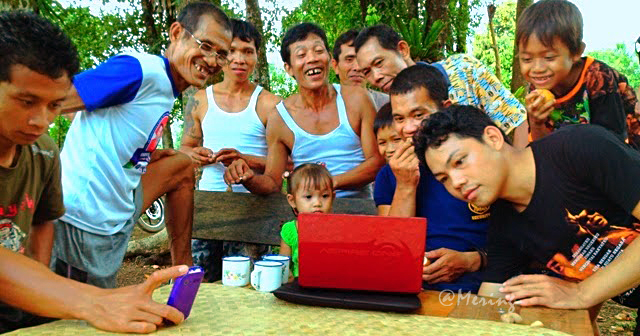
Edi is a handsome man, with fair and clear skin like most Dayak Salako. Don’t ask him how many girlfriends he has, though. He was also one of the few youths from Loncek village that were fortunate enough to attend school. His father was a pensioner who had taught in primary school, and had to bring up eight children, one of them is Edi. For his school fees, Edi would take up any job — selling sausages, used clothing and even become a forest harvester.
Yayasan Pemberdayaan People Forest and Ripe Nusantara (YPPN) Pontianak carried out an assessment in 2011 at Teluk Bakung village and found that there were no less than 200 youths who had dropped out of school (OMPS), including at Loncek.
I couldn’t resist my curiosity and tapped Edi on the arm; he was busy watching the dancers at the karaoke stage.
“Those people gathering under the stage, what are they doing?”
“They are playing kolok-kolok, bang*.”
I frowned. Kolok- kolok is a gambling game played with three dices and six pictures on a canvas the size of a cardboard.
“Crab, fish, prawn, moon, vase, flower,” screamed the bandar (gambling bookie).